
Abell multi-base station interconnection system-ASC
ASC(Abell Site Connection)
It is aset of multi-base station interconnection system independently developed byAbell according to the communication needs of industry and enterprise users forcross-regional and large-scale coverage.
The systemconnects multiple single-
site repeater systems through a set of standard IPnetwork, and handheld and vehicle terminals can automatically roam acrossregions with the help of IP base stations, without geographical restrictions,and realize uninterrupted voice and data communication. The maximum number ofstations networking is designed to be 64 repeaters.
Introductionof Abell multi-base station interconnection system ASC
MultipleDMR repeater distributed in different geographical locations are interconnectedthrough IP network to form an emergency communication network with largersignal coverage, more business, easier operation, easier subordinate and easiermanagement than a single relay station. Support voice, short message service. Italso supports call preemption, roaming, location, authentication, recording alarm,remote vigour/activation, GIS, user management, remote device management, etc.From the interconnection network composed of up to 64 repeaters to a manageablesingle repeater station system, it is widely used in: enterprise production schedulingnetwork, forestry fire prevention and emergency relief communication network,police and prison command communication network, railway power and portinfrastructure scheduling communication network
Basestation hardware:
R-80 system version, system terminal, routing switchingequipment, IP switching equipment, business processing server
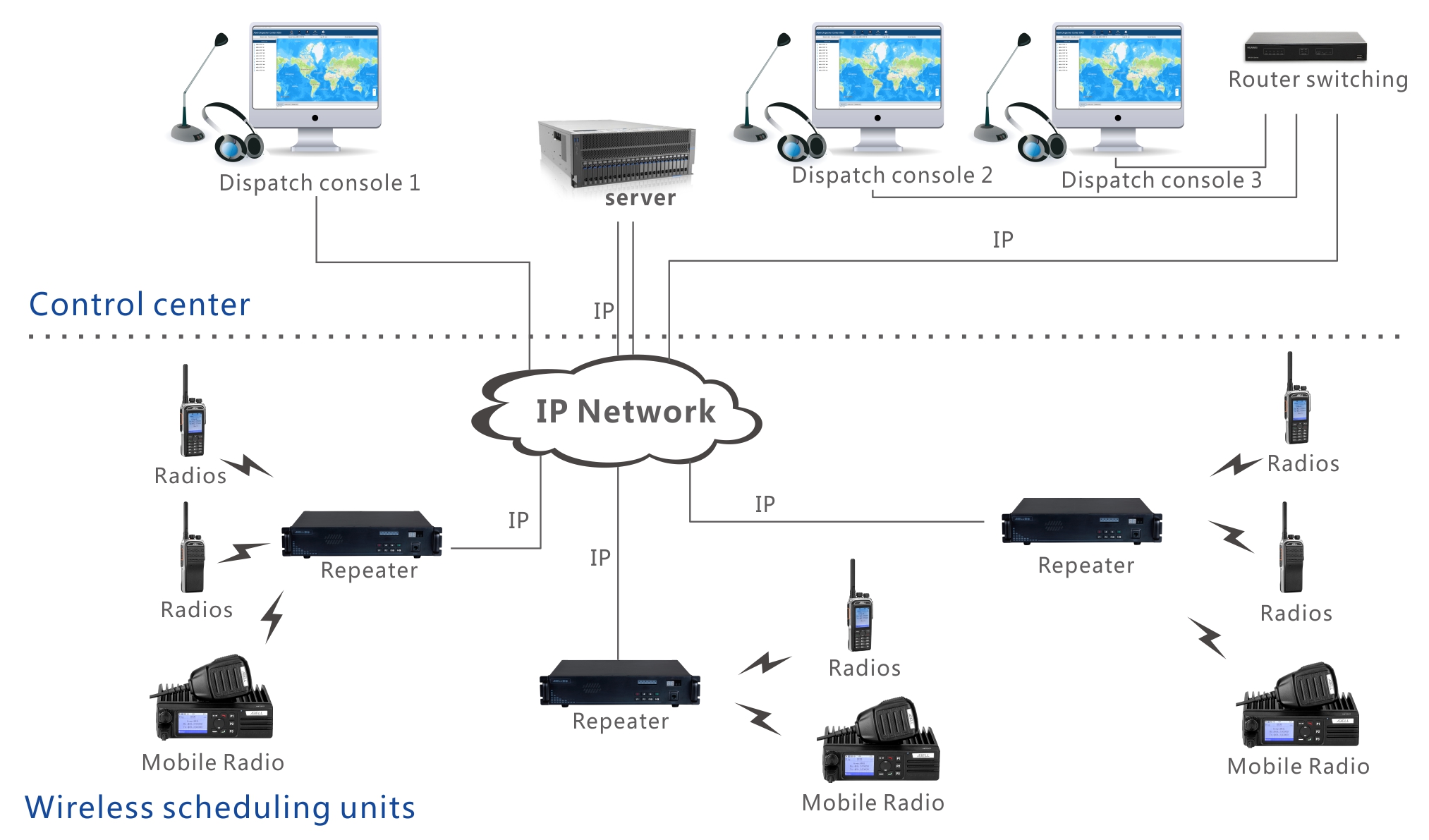
Abellmulti-base station interconnection system ASC structure
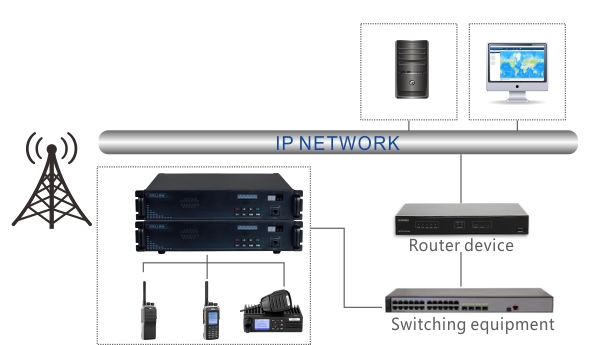
Abellmulti-base station interconnection system sketch
Singlestation scheduling system sketch
ASC 64multi-base station system sketch
Lanatmosphere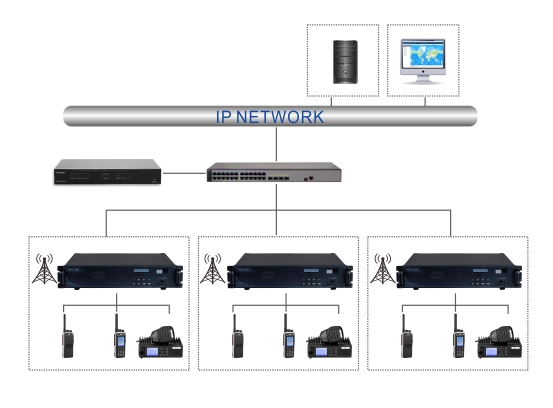
WANatmosphere
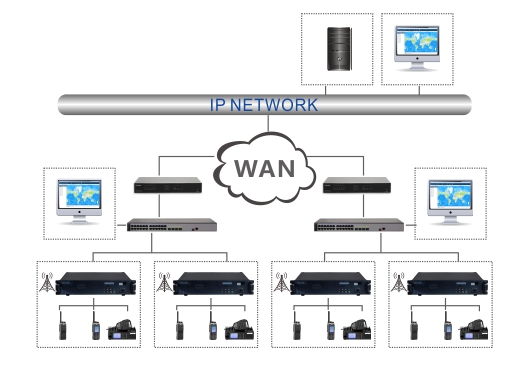
Terminaland software management platform supporting ASC system
| Type | Model | Function optional |
| Terminal | A720T/A780T system version | Beidou/GPS; vibration |
| AM780T/AM780T-BS25 system version | Beidou/GPS; vibration,local record | |
| A720 Tanti-explosive system version | Beidou/GPS; vibration | |
| A780 Tanti-explosive system version | Beidou/GPS; vibration | |
| Software managingplatform | ADC8000 smart scheduling | |
ARD800 remote diagnosis and network management | ||
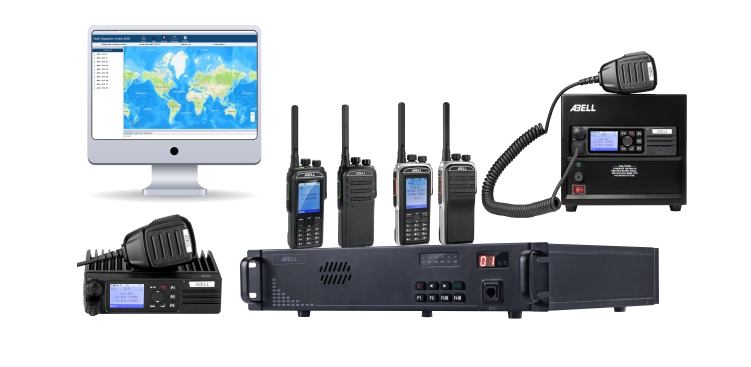
Intelligent Dispatcher Center - ADC8000
The intelligent dispatcher center ADC8000 is a sub-system of Abell ASC multisite network system. It is based on the Windows PC, provides versatile functions
like the users management, devices management, record management via internet, GIS information and etc.
ADC8000 provides different levels of dispatchers to manage the users and the devices in the system. It also provides the management with elements such as repeater, switching server and dispatch server based on SNMP technology. The administrator can obtain and modify network attributes, and provide remote reset of network devices, real-time display of network topology. IP calling resource group canbe modified and reorganized.
Trunking Dispatcher
User registration function:
The userregistration function allows the system to enable registration, and onlyhandheld radios added to the registration list can communicate within thesystem. Non-registered users are denied communication, effectively preventingunauthorized users from accessing the system. The system can manage handheldradios in the registration list for various tasks purposes.
DMR protocol combined with TCP/IP protocolcommunication intercom, domestic and international interconnection :
System C/Sarchitecture mode, data transmission adopting TCP/IP network transmission protocol,where there is an IP network, an IP interconnected system can be built. Thesystem server can be deployed in LAN(local area networks), WAN(wide areanetworks) (requiring static IP), cloud, VPN, and other network environments tomeet the needs of different environments, achieving domestic and international interconnection.
System recording management function:
Thesystem recording function saves real-time voice data from all handheldterminals in the background system. Recording data can be queried and playedback in the dispatching software throughdecoding.
Real-time location positioning function:
Supportspositioning, track playback, map display, and visual dispatching. Terminaldevices support GPS, Beidou, and other positioning methods. The system canobtain real-time location
informationof each terminal, displayed on the dispatching map. Dynamic track queries ofterminals can be performed through the dispatching console.
Remote programming frequency function: Supports remoteprogramming of interconnected repeater frequencies.
Thisfunction facilitates users to remotely modify repeater frequency parameters,providing frequency writing guarantee for repeater deployment in remote andinaccessible locations such asforests and mines.
Support for group call, all call, and broadcast callfunctions:
Thesystem supports group call, all call, broadcast, and other voice callfunctions.
Remote diagnosis and fault alarm function:
VisualRDAC diagnostic and control software, supports diagnosis of faults and faultalarm functions for interconnected repeater devices. It includes diagnosis of RFpower amplifiers, exciters, receivers, control boards, and other modules,monitoring device
operationstatus in real-time, providing safe and effective protection for systemhardware.
Remote alarm function:
Inemergency situations, one-click alarm and networked alarm can be achieved.While providing local alarms, the alarm signal can be sent to the networkeddispatch console, allowing users to better request assistance in criticalmoments.
Real-time call status indication:
Throughthe dispatching software, the real-time call status of members in the group canbe observed and displayed on the dispatch console.
Implementing group/user hierarchical management in thedispatch console, convenient management of terminal call priority, andefficient dispatching operation:
Group/userhierarchical management allows real-time viewing of users in each group.
Network topology structure display:
Thenetwork topology structure display function display in the dispatcher and RDACdiagnostic and control software which repeater devices are currently connectedto the system, online/offline status of repeater devices, facilitating users tointuitively understand the current network structure of the system;
C/S architecture, unified deployment and management ofnetworked devices, unified storage of voice, positioning:
and logdata: The system architecture is based on C/S architecture, facilitating centralizedmanagement of data to ensure the security of various business data.
Remote stun, remote kill/revive:
Systemadministrators can perform remote stun, remote kill/revive operations onspecific terminal users.
Join hands with ABELL to deliver DMR radio solutions worldwide.


外贸表单1
Country/Region*
*company
Email*
*Phone Number*
*Interested Model
Message*
**I agree to receive ABELL updates and may unsubscribe anytime. Submission confirms acknowledgment and acceptance of Abell Privacy Policy.


